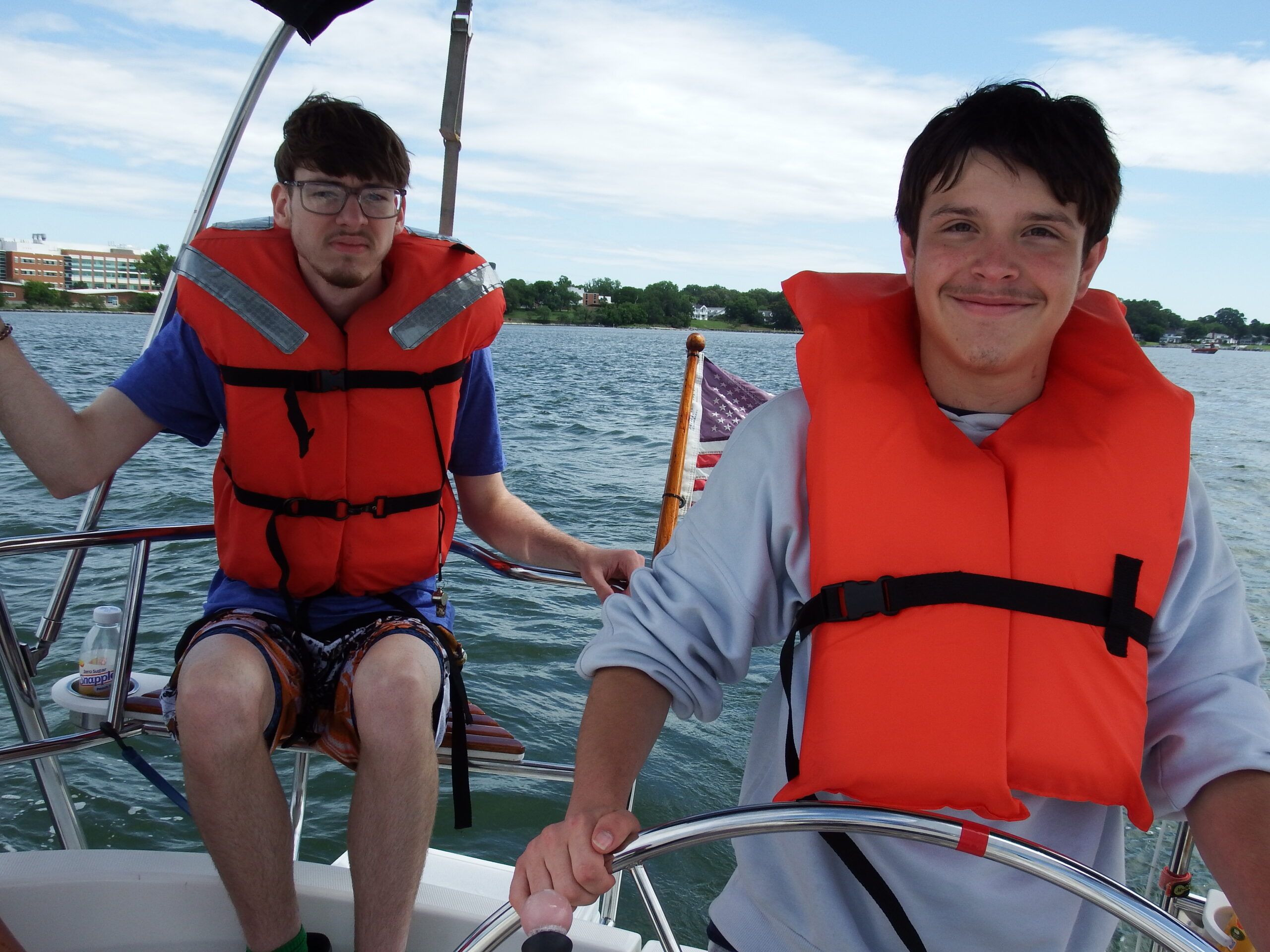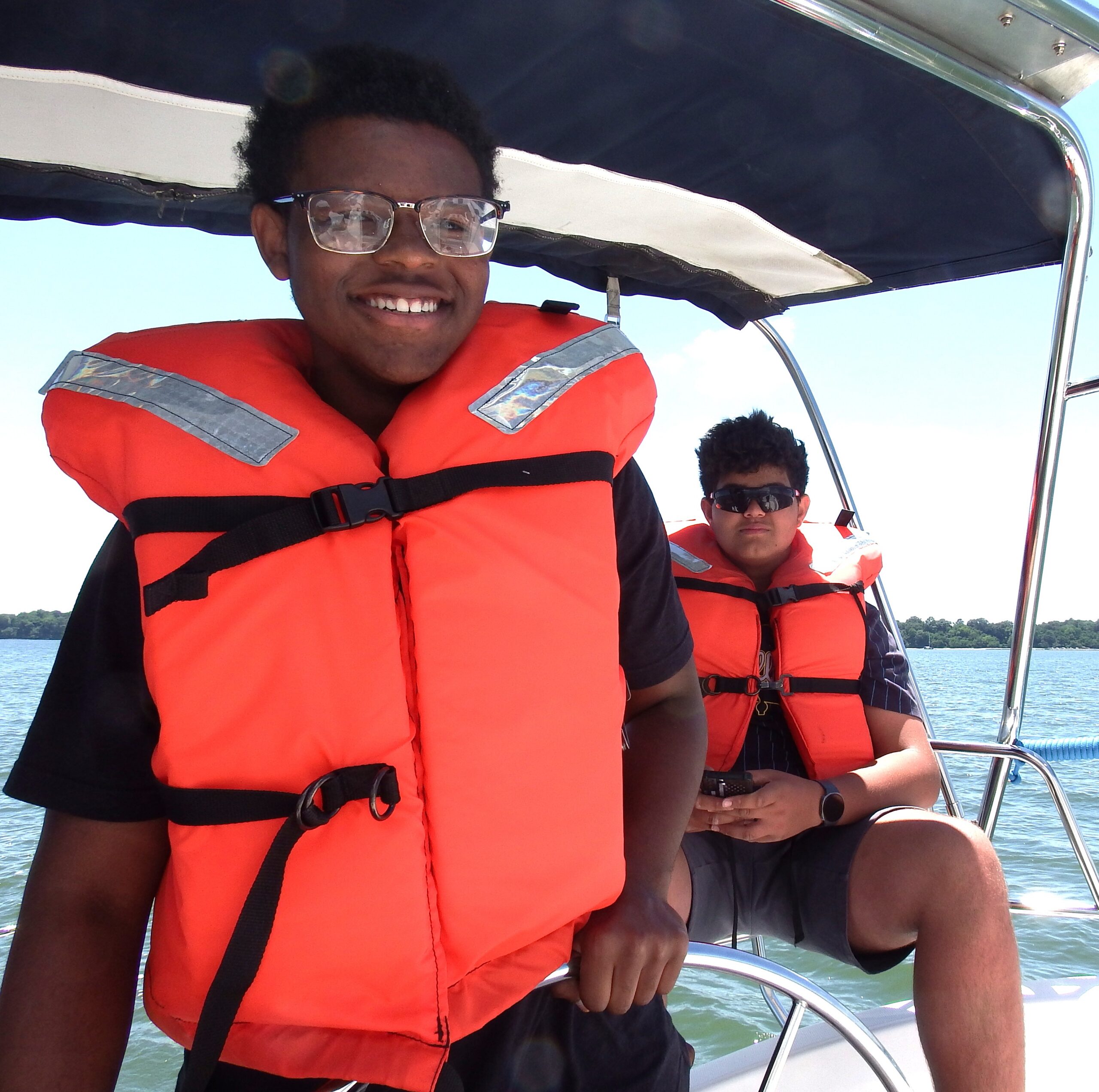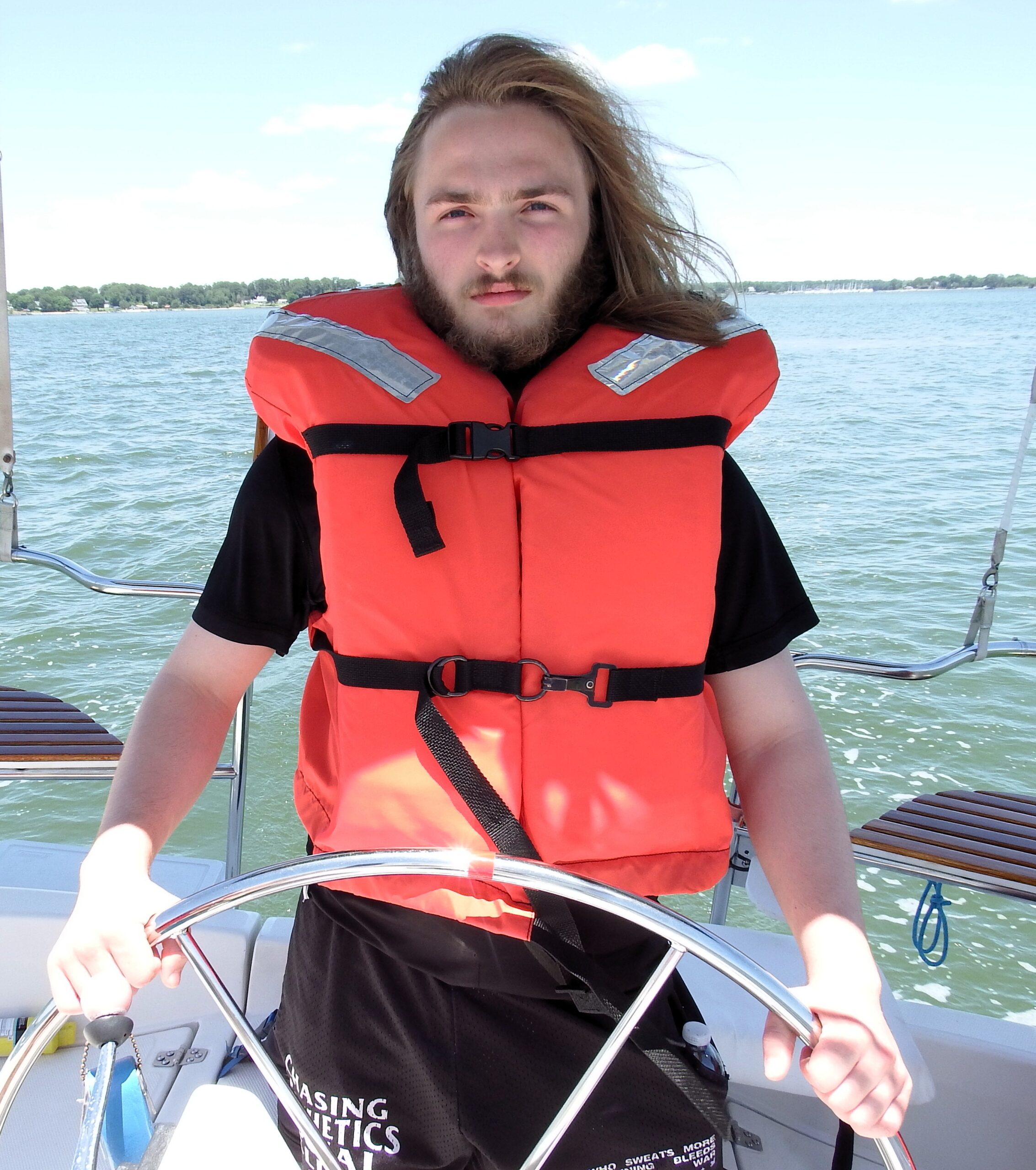
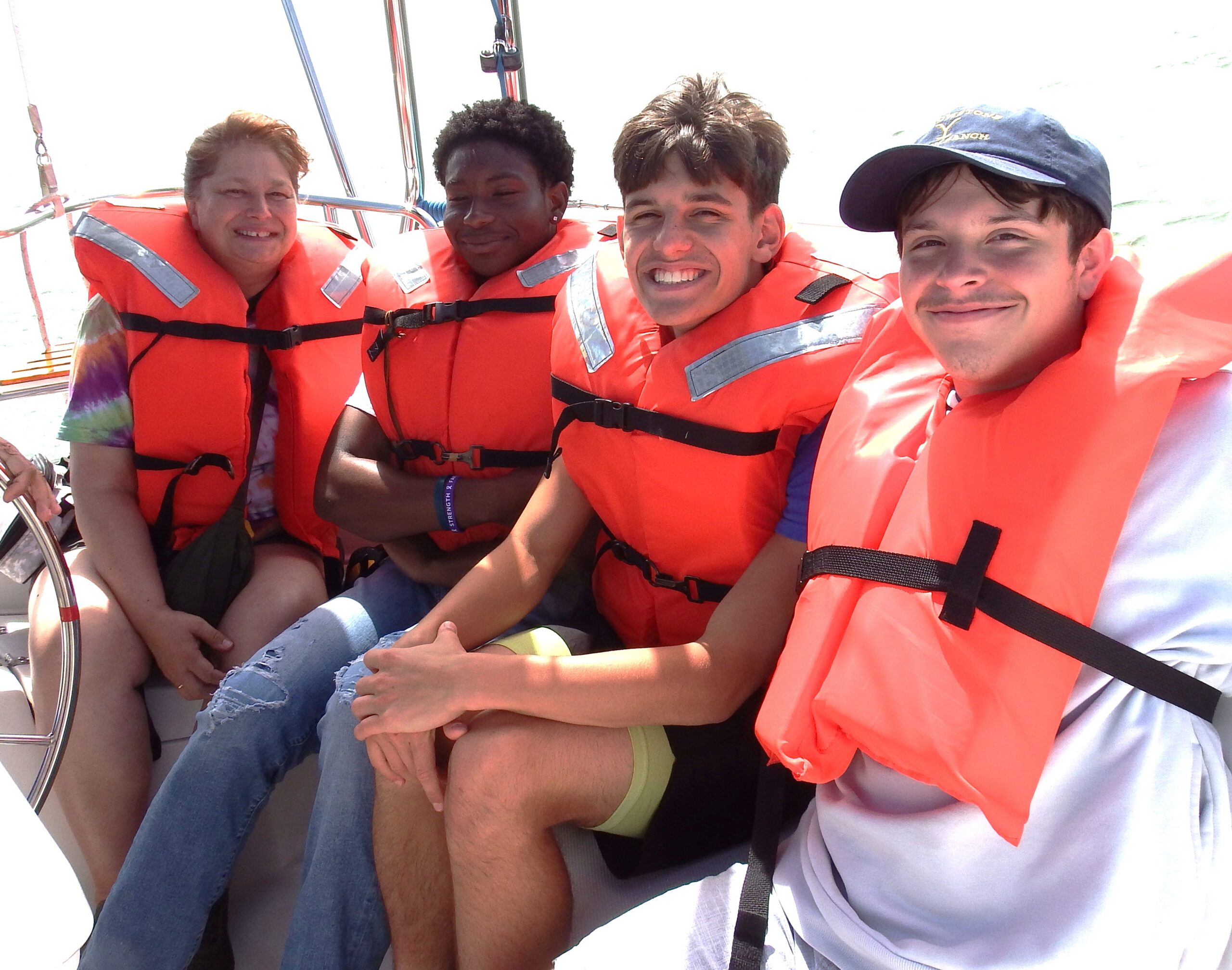
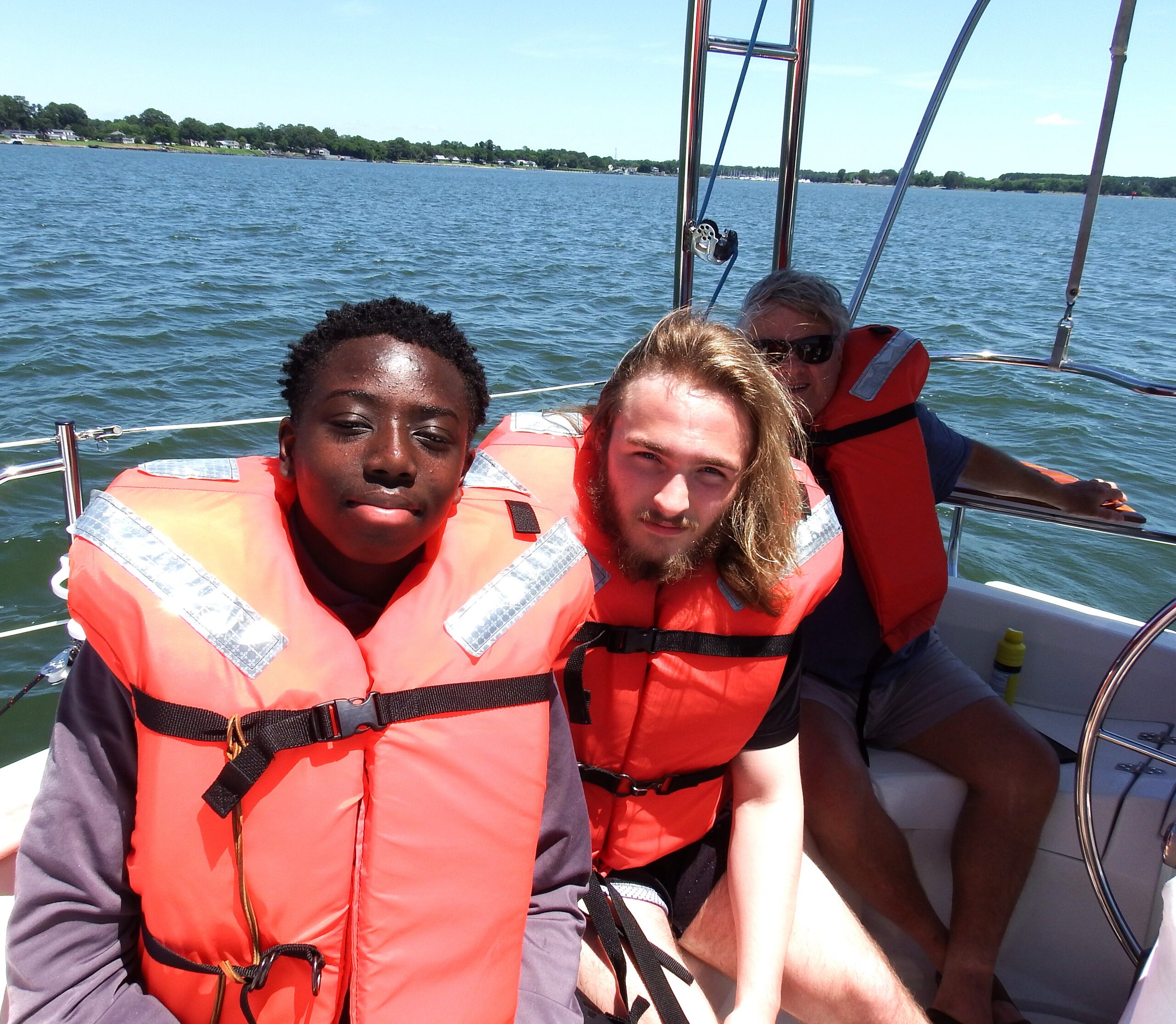
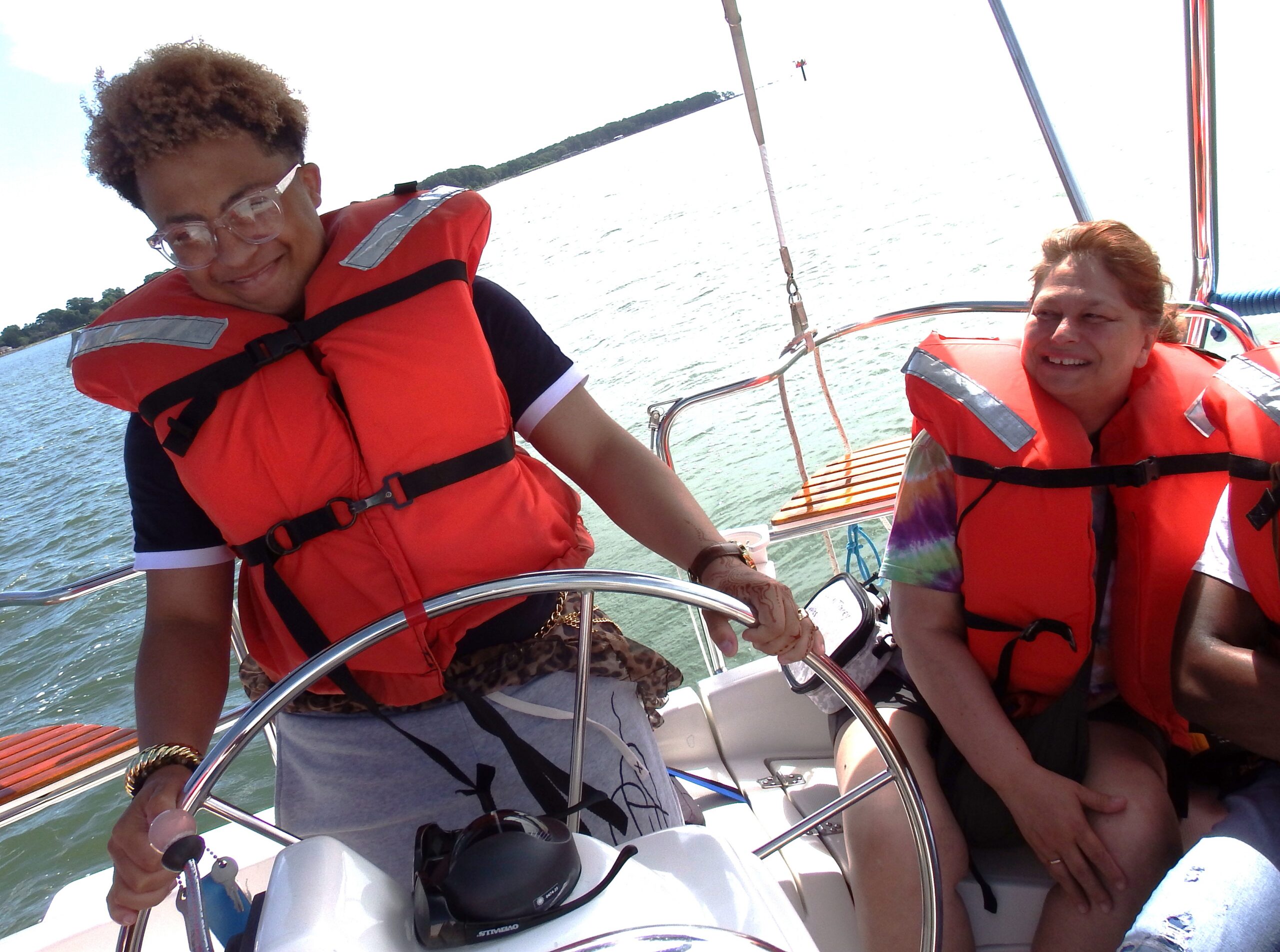
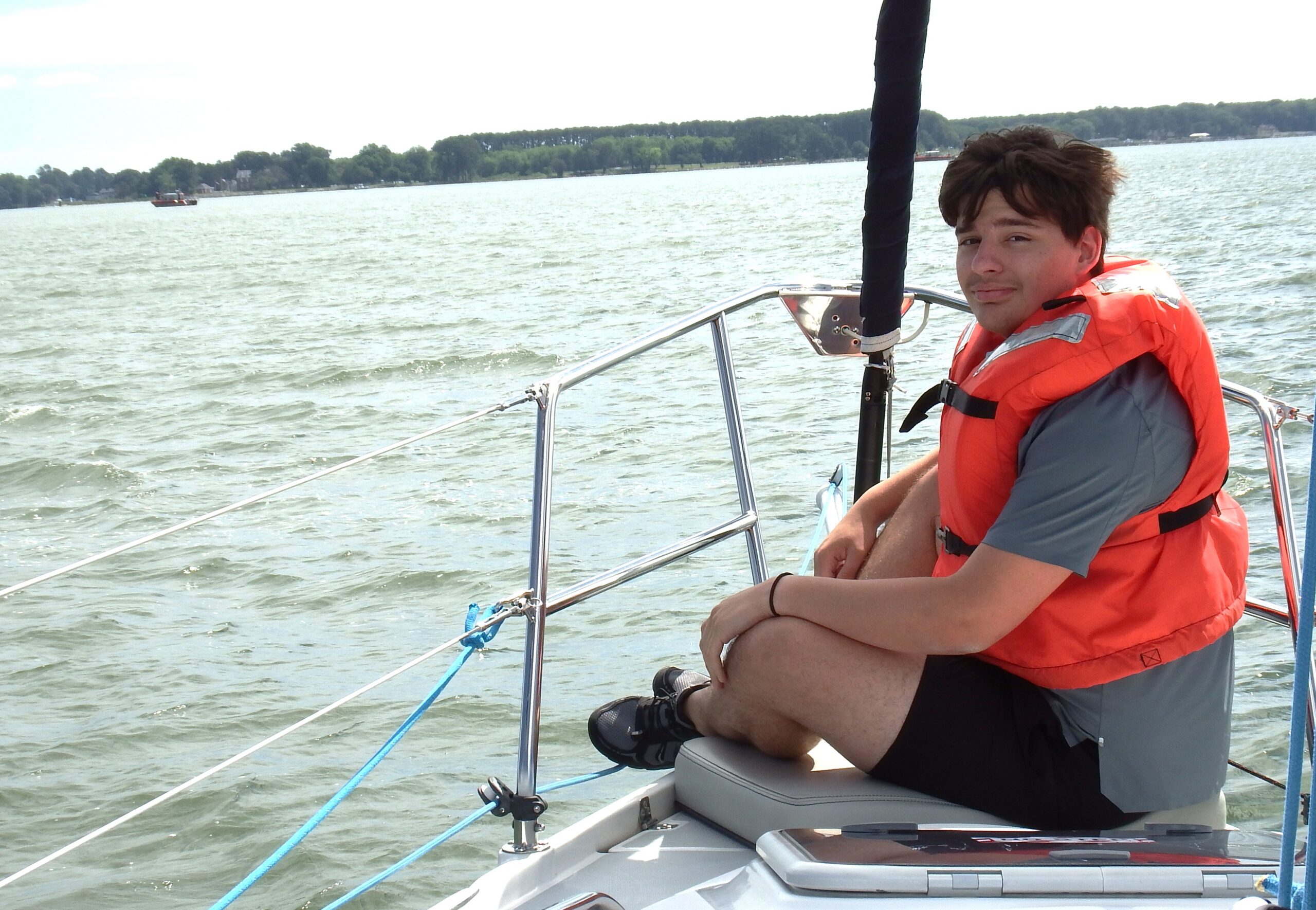
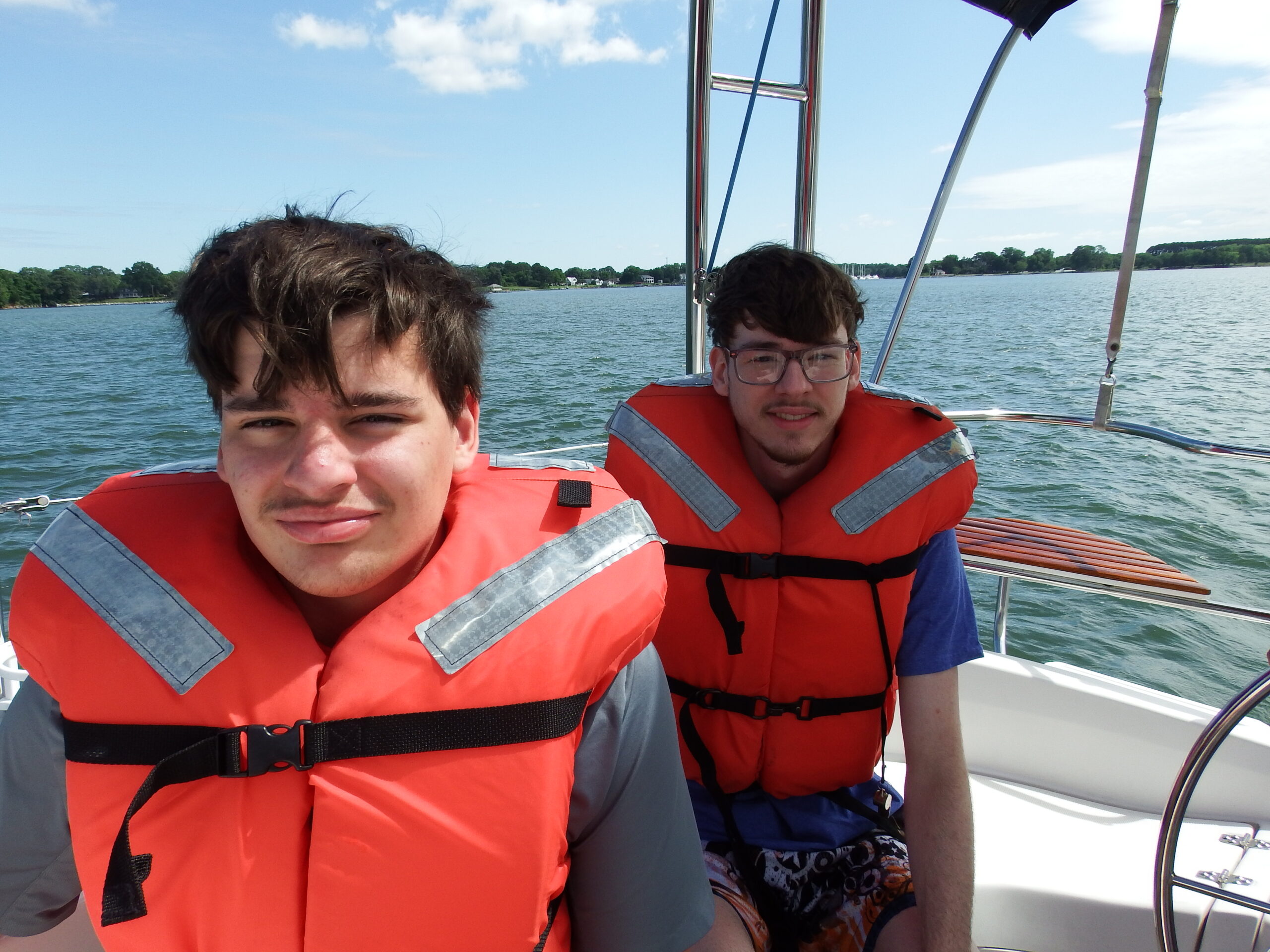
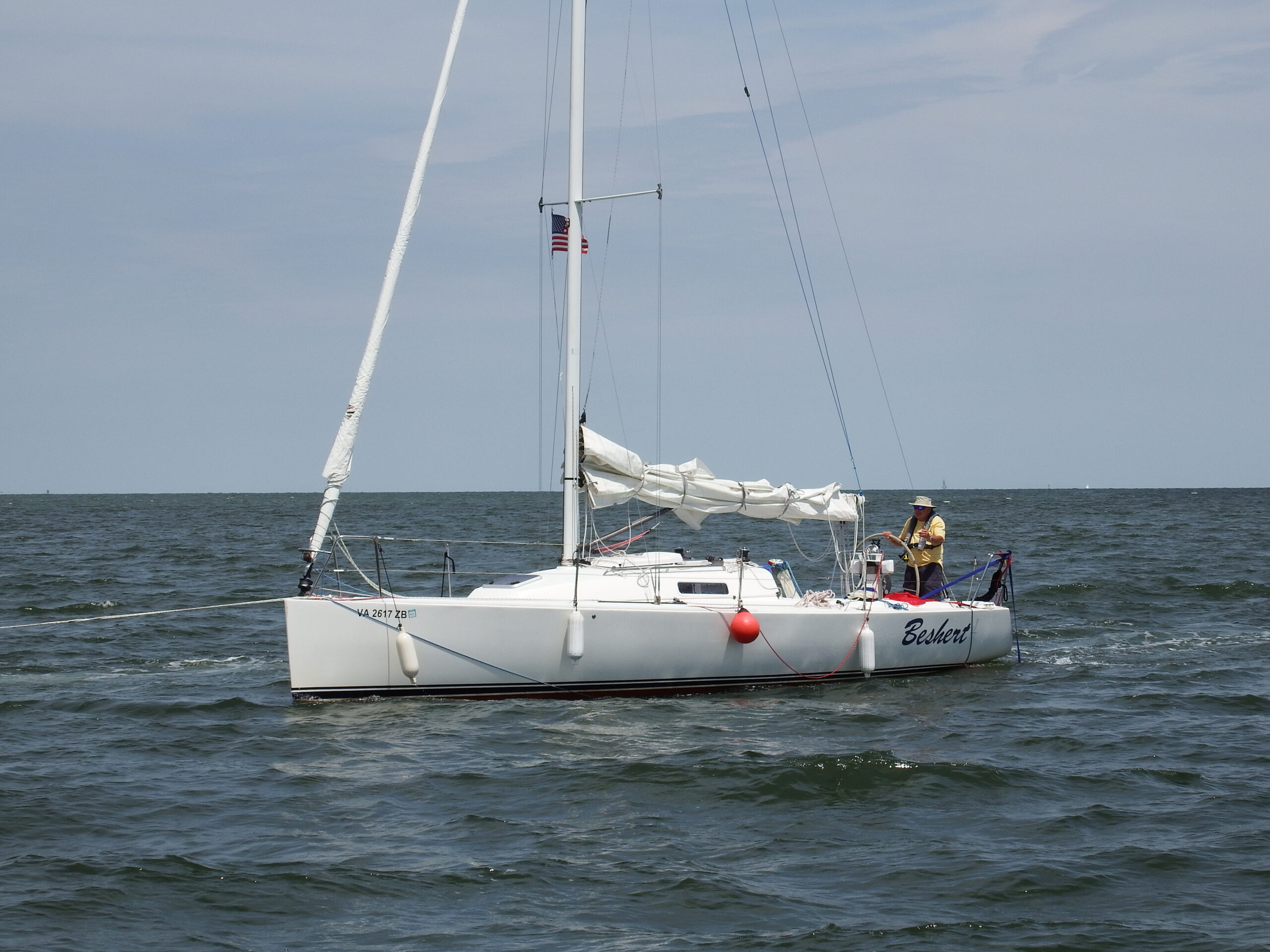
In perhaps the most significant sail of my life, I got to take out 12 orphans from the Milton Hershey School. Broken into two 2-hour sails with six boys each, they got to learn how to sail the York River off Yorktown and to enjoy the luxury of cruising on a beautiful June day.
Their teachers and accompanists were Cathi and Phil Bertrand. Phil said, “We have them live in a house together to learn life skills, teamwork, organization, time management and so on. There are hundreds of houses like ours, because the school itself has 2,200 students in elementary through high school. Our work is supported by an endowment that Milton Hershey made years ago of $5 billion that is now worth $23 billion.”
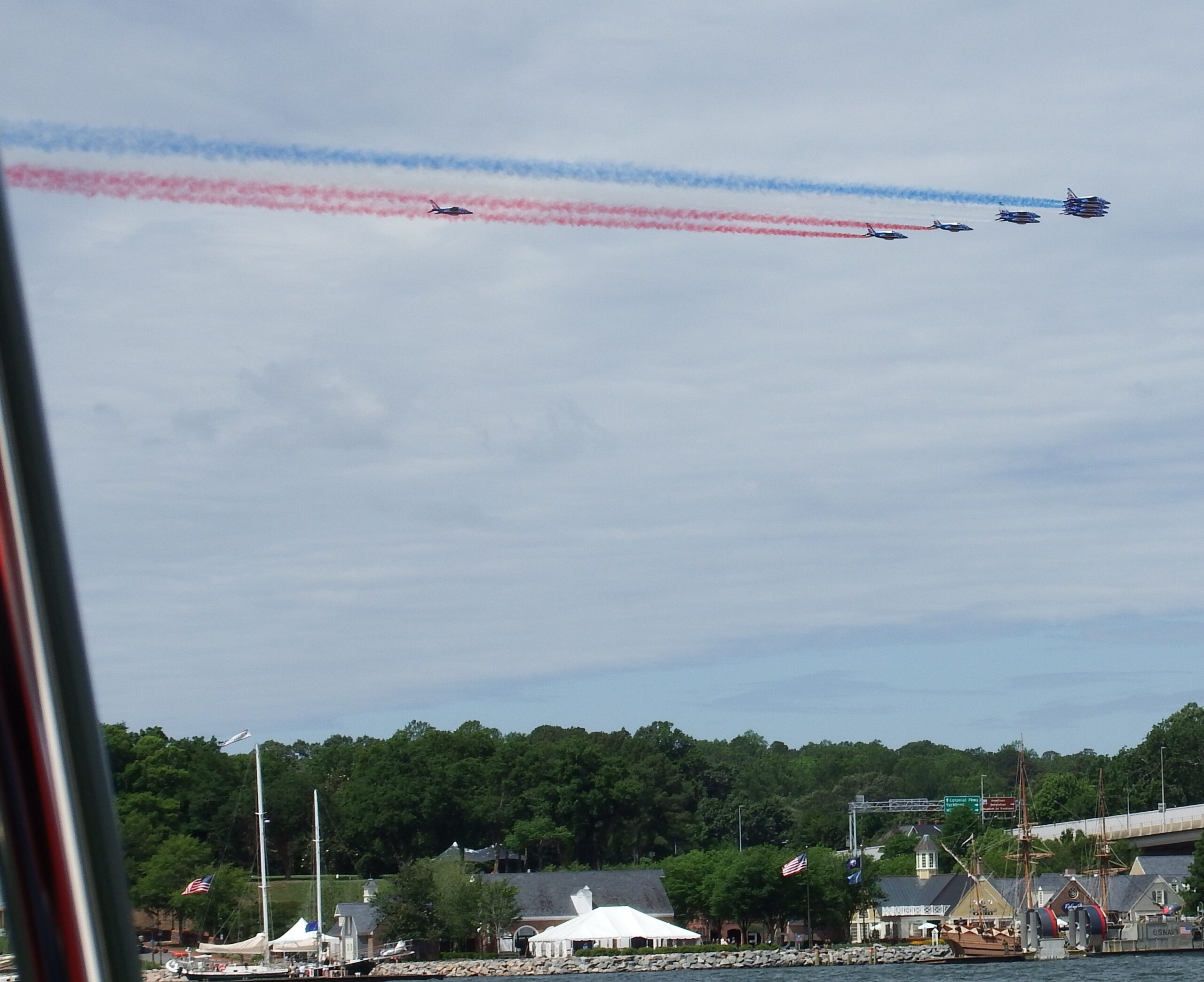
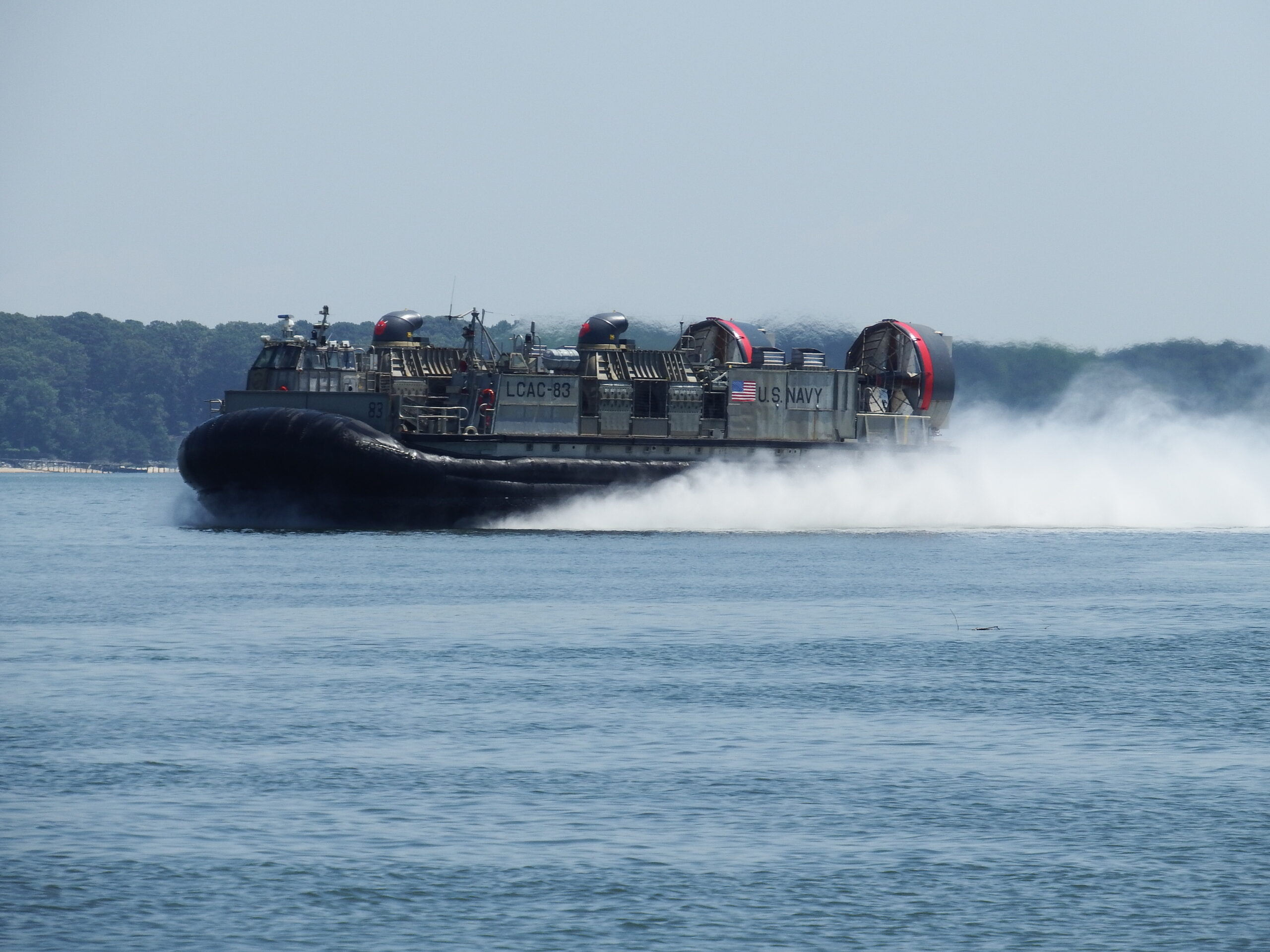
Because of festivities at Yorktown spanning four days, they got see the Thunderbird jets scream overhead. Back on the water, they saw a US Navy hovercraft gear up and charge right toward us (seemingly). It was exciting to me, so I can only imagine what it was like for their first time on a boat. Coincidence meets opportunity.
Legacy of Opportunity
The Milton Hershey School in Hershey, Pennsylvania, stands as one of the most remarkable and enduring philanthropic institutions in the United States. Founded in 1909 by chocolate magnate Milton S. Hershey and his wife, Catherine, the school was conceived not as a charitable afterthought but as the centerpiece of the Hersheys’ belief that wealth should serve a broader social purpose. Today, more than a century later, the school continues to embody that mission, providing life‑changing educational and residential opportunities to children from low‑income backgrounds across the country.
 Milton and Catherine Hershey had no children of their own, a personal loss that shaped their vision for the future. In 1909 they established the Hershey Industrial School (renamed the Milton Hershey School in 1951) as a home and vocational school for orphaned boys. The Hersheys endowed the school with a trust funded by the Hershey Chocolate Company, ensuring that the institution would not merely survive but thrive. When Catherine died in 1915, Milton Hershey quietly transferred the bulk of his fortune—including controlling interest in the chocolate company—into the school’s trust. It was one of the largest philanthropic gifts in American history, and it remains the financial backbone of the school today.
From its earliest days, the school was designed to provide more than classroom instruction. Hershey believed deeply in the value of structure, discipline, and hands‑on learning. Students lived in small group homes, worked on the school’s farms, and learned trades that would prepare them for adulthood. Over time, the curriculum expanded beyond vocational training to include a full academic program, extracurricular activities, and college or career preparation. The school gradually opened its doors to girls in the 1970s and later broadened its mission to serve children from a wide range of family circumstances, not only orphans.
 What sets Milton Hershey School apart is the scale and depth of its support. Students receive full scholarships covering housing, meals, clothing, medical and dental care, counseling, and education. The school’s campus—spanning more than 10,000 acres—is a blend of farmland, academic buildings, athletic facilities, and student homes. With an enrollment of more than 2,000 students, it is one of the largest residential schools in the world.
The school’s model is intentionally holistic. Students live in “student homes” with houseparents who provide stability and guidance. Academic programs are paired with character development, leadership training, and career pathways that begin as early as elementary school. High school students can pursue specialized tracks in fields such as agriculture, health sciences, engineering, and business. Graduates receive continuing support through the school’s “Continuing Education Scholarship,” which helps fund college or vocational training.
Milton Hershey School’s impact extends far beyond its campus. The Hershey Trust Company, which manages the school’s endowment, remains a major economic force in central Pennsylvania. The school’s agricultural operations preserve open land, while its employment footprint supports thousands of local families. The Hershey community—town, company, and school—are intertwined in a way that is rare in American civic life.
The school has not been without controversy. Its immense endowment, now valued in the billions, has drawn scrutiny over governance, spending priorities, and oversight. Yet even critics acknowledge that the institution remains one of the most ambitious and generous educational experiments in the nation’s history.
At its core, the Milton Hershey School is a living expression of its founder’s belief that opportunity should not be limited by circumstance. More than 100 years after its founding, the school continues to transform lives—one child at a time—through a blend of stability, education, and the simple but powerful idea that every child deserves a chance to thrive.
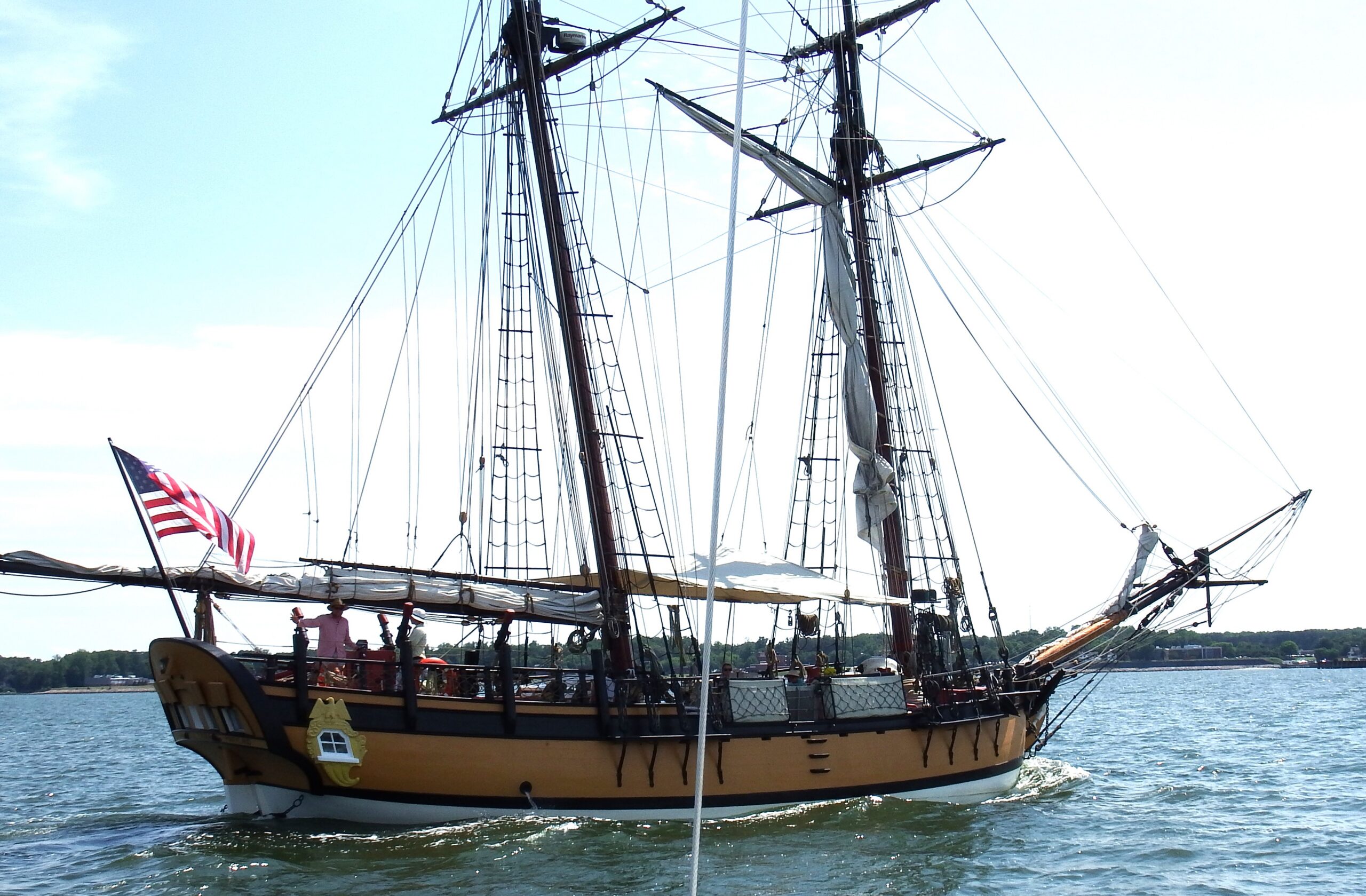
Sultana Sails In
The tall ship Sultana sailed into Yorktown three days after two other tall ships bailed for scheduling issues.
The tall ship Sultana is one of the most faithful and evocative colonial‑era replicas sailing in American waters today, a vessel that brings the maritime world of the 1760s back to life with uncommon precision. Launched in 2001 from Chestertown, Maryland, she is a meticulously crafted reproduction of the original 1768 British Royal Navy schooner that once patrolled the Chesapeake Bay enforcing the Townsend Acts. At just under 50 feet on deck, the original Sultana was small by naval standards, but she was fast, weatherly, and ideally suited for the shallow tributaries and winding channels of the Bay.
The modern Sultana carries that same DNA. Built using traditional methods—hand‑hewn timbers, trunnels, tarred rigging—she reflects the craftsmanship of an 18th‑century yard while meeting 21st‑century safety standards. Her rig is a compact but powerful gaff‑topsail schooner arrangement, giving her the agility and sail‑handling rhythm characteristic of colonial workboats and naval tenders. When she heels under a fresh breeze, she offers a glimpse of what Chesapeake sailors, customs officers, and naval midshipmen would have experienced more than 250 years ago.
Today, Sultana serves as a floating classroom and ambassador for Chesapeake history. Operated by the Sultana Education Foundation, she hosts thousands of students each year, teaching navigation, ecology, and colonial maritime life through hands‑on experience. Her crew demonstrates period seamanship, from setting canvas to explaining how the Royal Navy used small schooners to chase smugglers and enforce taxes in the years leading up to the American Revolution.
For coastal towns and river communities, Sultana is more than a replica—she’s a living link to the Bay’s maritime past. When she ghosts along the Chester River under tanbark sails, she reminds modern audiences that the Chesapeake was once a highway of wooden hulls, hemp rigging, and the constant interplay between commerce, authority, and rebellion.
Critical Review
Imagine my surprise when I read this critical review on Trip Advisor. Once I translated it, I discovered they erroneously clicked my company name instead of the name of the hotel they complained about.
Bon hôtel, bon repas, propreté, mais emplacement critique avec la route…
Tripadvisor review: Let’s Go Sail the York River in Gloucester Point, Virginia
Nous avons demandé 4 chambres doubles, nous avons reçu 4 fois 2 lits séparés ! Vous parlez de la plage de sable, il faudrait revoir la notion de plage, pierres, galets, pas moyen de se promener le long de la plage. Vous devez affranchir 4 mètres de galet, grosse pierre irrégulière avant d’avoir u peu de sable dans l’eau. Publicité mensongère car nous voulions une plage de sable, il y a un promontoir en béton où des transats sont installés, gros sables, il fallait avoir les chaussures spéciales pour se promener ou aller dans l’eau, difficulté même à perdre l’équilibre pour rentrer et sortir de l’eau, risque de se blesser !!!! Pas de jus de fruit frais, un jus d’orange frais il fallait payer !!!! et puis vous mettez qu’il y a une route, spécifié bien que ce n’est pas une route à faible circulation mais presque une autoroute, moto, voiture, bus un bruit infernal que vous soyez à l’hôtel au restaurant ou que vous soyez sur la plage. Dommage car bel hôtel, employés agréables et serviables. Belle découverte les écureuils. Repas très bons et variés. Hôtel propre mais il faut être plus correct quand vous vendez un séjour aucune plage de sable ! Route qui fait un bruit infernal ! jus d’orange payant ! j’ai des vidéos aussi où on voit qu’on perd l’équilibre pour entrer et sortir de l’eau! impossible de se promener le long de la plage!
orphans sail orphans sail orphans sail orphans sail